
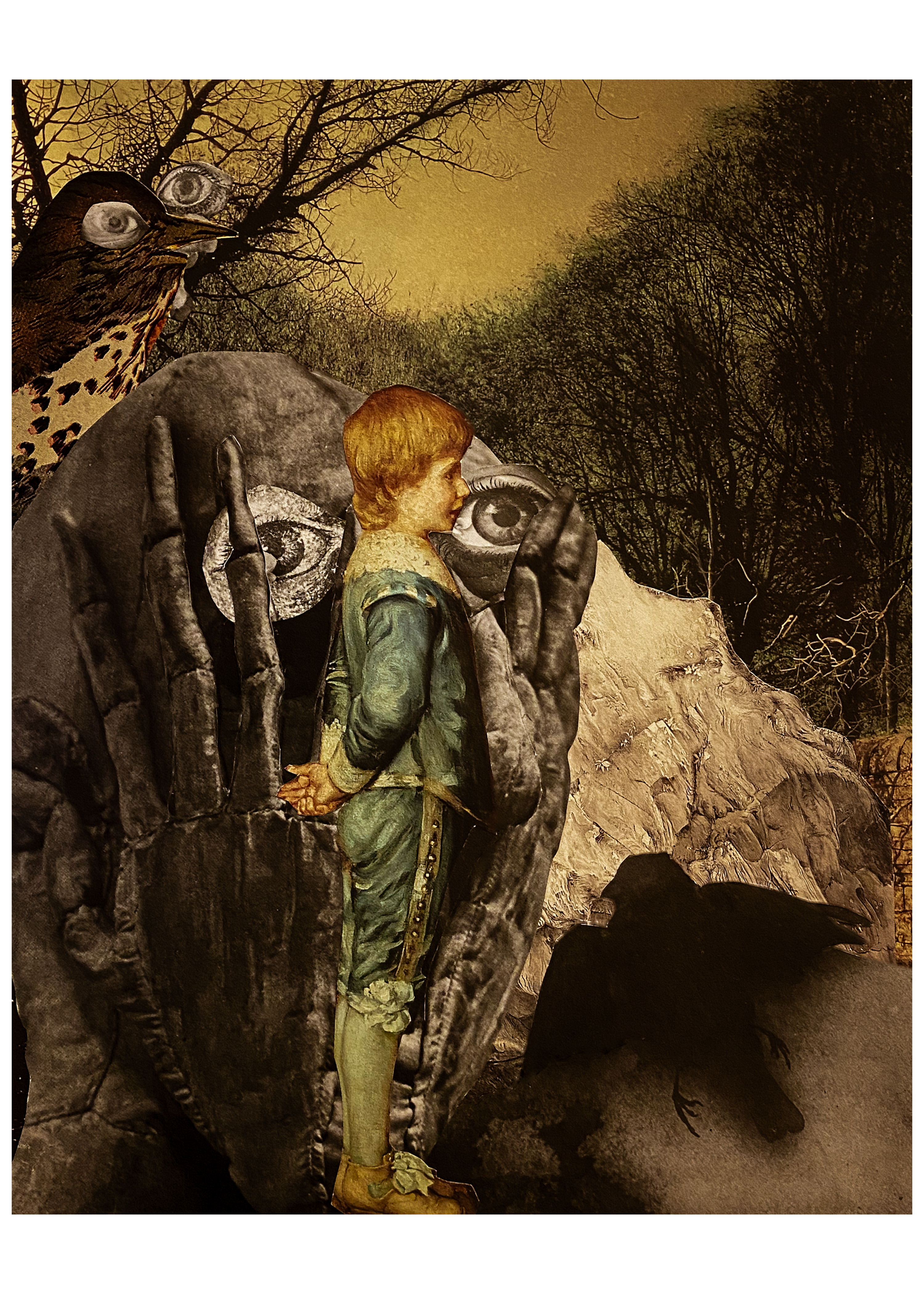
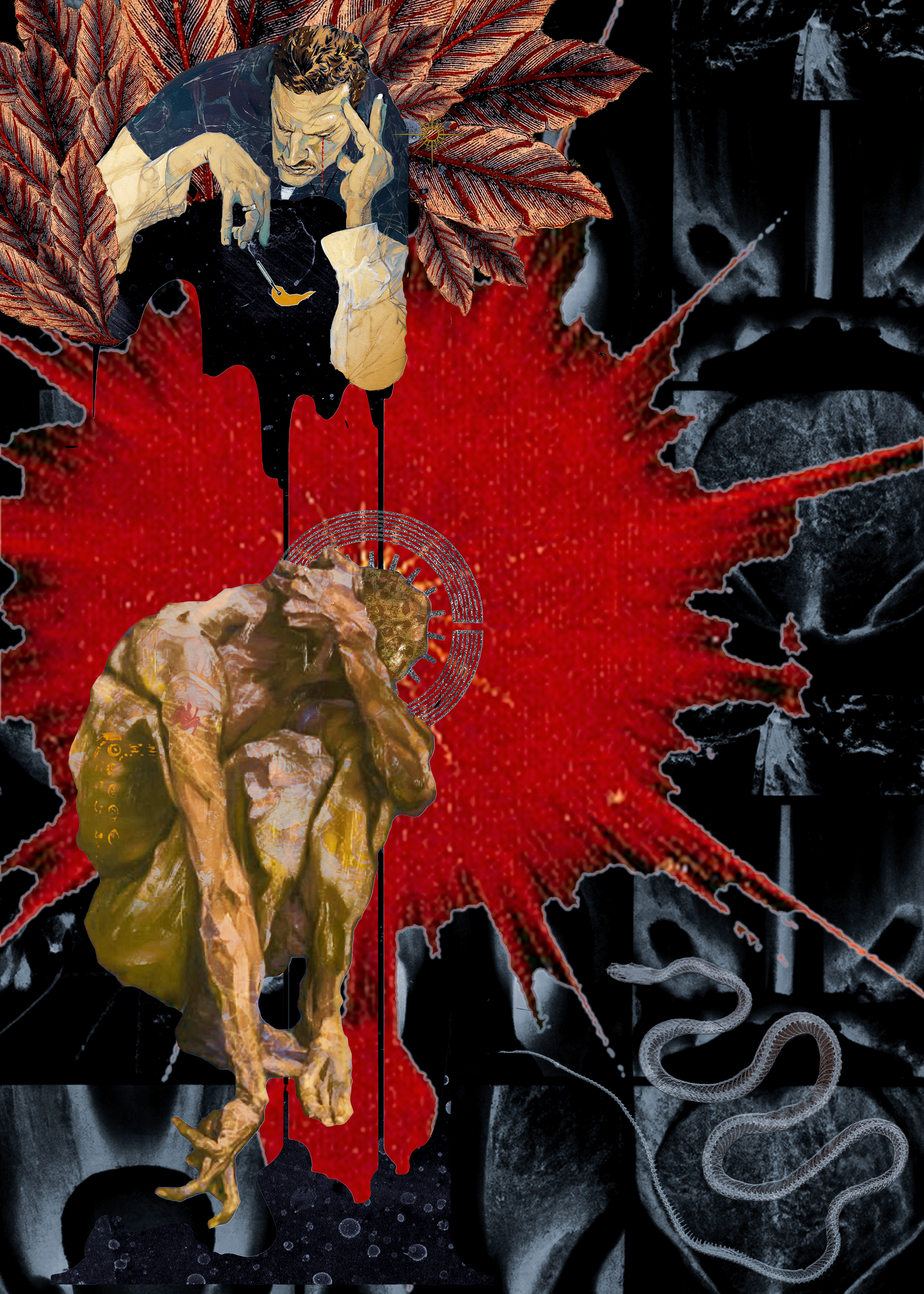
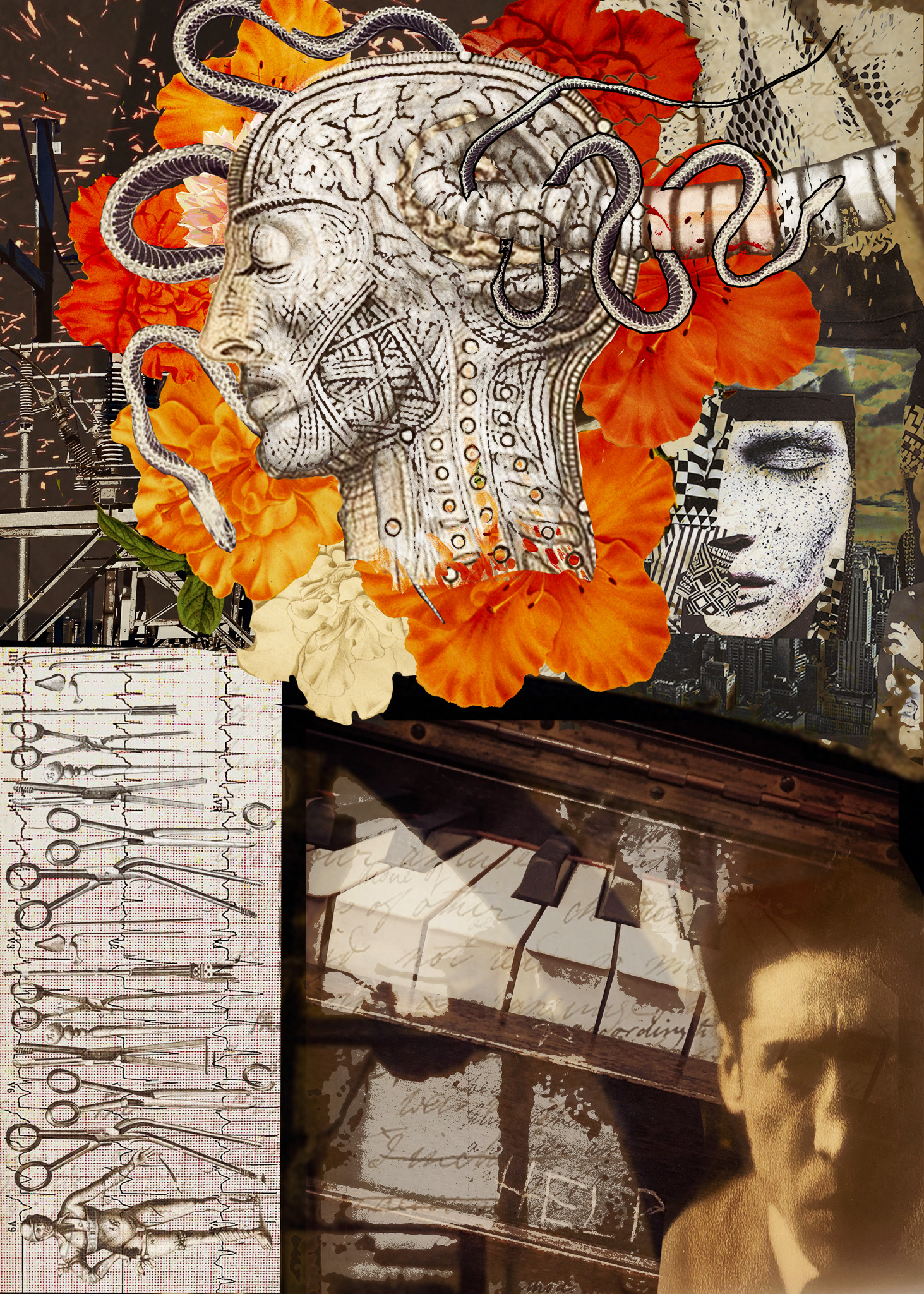
The intersection of art, literature, and human experience is a realm of boundless creativity and introspection. From August to October 2023, a group of fifteen talented artists embarked on a unique journey through the virtual halls of Kolaj Institute’s Collage & Illustration Residency – Frankenstein. Hosted by @kolajmagazine, the residency focused on Mary Shelley’s iconic 1818 novel, Frankenstein; or, The Modern Prometheus. The participants aimed to visually interpret this classic work and explore themes of creation, identity, and the boundaries of human imagination through the captivating mediums of collage and illustration.
Mary Shelley’s Frankenstein is a timeless tale that delves deep into the human psyche. It follows the story of Victor Frankenstein, a young scientist who becomes obsessed with unlocking the secret to creating life. However, he soon realizes the severe consequences of playing God and bringing unnatural life into the world. As the story unfolds, it explores human flaws such as grief, pride, an insatiable thirst for knowledge, secrecy, and shame, leading to tragic events that jeopardize everything Victor holds dear.
During this project-driven virtual residency, artists collaboratively produced a series of collages that beautifully illustrated the narrative. As a group, they analyzed the story, discussed its themes, uncovered symbols, and visually interpreted the text to resonate with a 21st-century audience. The residency spanned four weeks, allowing artists ample time to immerse themselves in their creative process and develop their ideas.
Guiding the residency were two remarkable facilitators, Christopher Kurts and Nancy Bernardo. Bernardo, a graphic designer and educator, shared insights on the intersection of collage and illustration, illustrating the market for collage artists. E. Francis Kohler, another notable contributor, discussed the history of adaptations of “Frankenstein,” emphasizing how the myriad versions of the monster itself resemble a collage.
The participating artists brought their unique perspectives and talents to this project:
- Claire Dannenbaum, a librarian and visual artist, used cyanotype collage to manipulate and reconstruct the conceptual life of books.
- Emily Denlinger, a professor of Photography & New Media, explored the human condition through her images. @emily_denlinger
- Suzanne Greenberg explored the dramatic potential of vernacular imagery through surreal juxtapositions and surreal milieus. @greenbergsuzanne
- Marta Janik, an analog and digital collage artist, incorporated elements of surrealism, kitsch, circus, mushrooms, and whales into her work. @martajanik_coolage
- David Edward Johnson, a mixed media artist, explored belief systems, identity, and the American Dream in his large-scale assemblage pieces. @davidedwardjohnsonart
- Anthony D Kelly, an illustrator, writer, and integrative psychotherapist, employed satire and humor in his artwork. @freeformanto
- Maureen Letton, influenced by her love for surrealism and punk culture, used a hybrid analog/digital approach in her work. @intention.florist
- Rosie Lewis, a multi-disciplinary artist and designer, centered her work on collage making, photography, and motion design. @rosieillustrated
- Anthony Naimo, a queer artist, created narrative compositions utilizing collage and found objects to explore cultural materials. @namelynaimo
- Rebecca Steiner’s collage compositions addressed themes such as the social construction of gender, identity, domesticity, and consumerism. @beccasteiner
- Jessica TranVo, a mixed media artist, incorporated elements of painting into her collages, often exploring dreamscapes and nature. @nnuiorsomething
- Elzbieta Zdunek specialized in digital grayscale collages inspired by silent films and historical theater. @surrellart
These artists showcased their talents and perspectives during the residency. Their work reflected a dynamic mix of creativity, introspection, and thought-provoking interpretations of Mary Shelley’s timeless tale. Kolaj Institute’s residency provided a platform for these artists to bring this important, historical book and its themes to 21st-century readers through the captivating medium of collage. A selection of their artwork will be exhibited at Kolaj Institute in New Orleans.
In the intersection of art, literature, and human experience, these artists have given new life to a classic tale, showcasing the power of visual storytelling and the enduring relevance of Mary Shelley’s Frankenstein.




 Anissa Malady